
Your needs, this model
Does it fit your priorities?
Do you want a K1 HRR with three selectable drive speeds?
The K1 S3DA manual lists a three-speed gear drive for the specified serial band.
Explore this need in the finder →Is the documented mulching route sufficient?
Honda lists the mulching plug as standard in this K1 S3DA configuration; a separate bagging mode is not included in the assessed plan.
Explore this need in the finder →Can the exact mower come without a grass bag, which you would supply or source separately?
The K1 S3DA configuration lists a 1.7-bushel bag as optional, not included; verify whether the used unit actually has it.
Explore this need in the finder →Must an individual used machine be confirmed recall-unaffected?
Honda recall status must be checked on the individual frame/engine identifiers and repair record.
Explore this need in the finder →Three gear choices, with a bag that was an accessory on this version
The HRR216S3DA K1 is a useful older reference for someone comparing a walk-behind with selectable self-propelled speeds. Honda’s manual selector lists the S3DA type for frame prefix MZCG serials 6,000,001–6,157,470 and links the early K1 manual. That source identifies the HRR216K1 S3DA configuration; it should not be confused with the similarly named HRT216S3DA or later three-speed types. Verify the frame plate before relying on any K1 specification, especially when a used mower has replacement parts or an incomplete history.
Honda’s K1 table describes the HRR216S3DA as self-propelled with three gears. It lists ground speeds of about 1.8, 2.7 and 3.4 mph. Those discrete settings give the operator more than the single 2.8 mph pace documented for the K1 SDA, but no infinitely variable control. The same manual explains the drive clutch lever and the S3D shift lever separately. This is helpful when an owner wants a few deliberate speeds for mowing or moving the mower; it does not make the mower a ride-on machine or tell you how it will behave on a specific slope.
Mulching is standard; bagging needs confirmation
The K1 manual lists a 21-inch cutting width, adjustable height from 1 to 3-1/2 inches and 80.3 pounds dry weight for the HRR216S3DA. Its feature table identifies the mulching setup and shows the 1.7-bushel grass bag as an optional accessory for the K1 HRR types. Honda separately describes an optional bag kit; do not assume the mower listing includes the bag, frame or correct blades. The supported bagging setup is real if the correct kit is present or sourced, but a missing bag is a practical purchase and condition issue. The manual does not list a side-discharge chute as standard for the HRR model; do not mix it up with the HRT side-discharge family.
This assessment therefore treats mulching as the standard operating route and bagging as conditional on the Honda bag kit being installed. The small 1.7-bushel rating comes from Honda’s optional accessory listing, not an estimate of current bag condition or how frequently a lawn must be emptied. The manual does not establish an acreage limit, runtime, or numeric maximum slope. If bagging is essential, verify the accessory by part and fit before buying; if the bag is already torn or a substitute is fitted, the nominal capacity is not the unit’s present usable capacity.
The mower uses a GCV160 160 cc gasoline engine and recoil start. A flywheel-brake lever must be held to run the engine and blade, so releasing it stops both. Fuel, oil, air-filter, blade and storage care remain part of the ownership plan. This is different from the VXA Roto-Stop arrangement that separates blade stopping from engine operation. It also differs from the later K11 PKA, VKA, VLA and VYA group: those have different serial-specific manuals, control descriptions and specifications, even when their family name looks familiar.
Who should look for it—and what to inspect
The S3DA is most compelling if the candidate’s three-speed transmission is verified and the operator wants powered assistance at more than one fixed pace. Its 80.3-pound dry specification matters when lifting, loading, turning around tight trees or storing the mower. A drive mechanism can reduce the work of forward travel but cannot erase transport weight or restore worn cables. On a used example, test the clutch and each speed, check blade condition and deck integrity, and confirm the rear shield and any optional bag hardware before judging it against a simpler push model.
Honda’s current U.S. gas-mower section labels that line discontinued. A K1 S3DA is an earlier product reference, not a current sale offer or assurance of remaining warranty. Use the real frame and engine serials with the official selector, ask for service documentation, and check Honda’s recall/update lookup for the specific unit and repair status. A model code is not a unit-level recall clearance. If the serial falls outside 6,000,001–6,157,470, this review is not the right evidence base for its setup; identify the correct manual and reassess its controls, accessory package and generation.
Alternatives from the same manual family
The K1 SDA uses a one-speed self-propelled transmission and is lighter on paper, while the K1 PDA is pushed by the operator. The later TDA and TKA offer three speeds with a standard bag in their specified K2/K4 forms, whereas this K1 S3DA’s bag was optional. If you need bagging without accessory uncertainty, confirm the correct kit on the machine or choose a model whose exact package includes the bag. If you mainly mulch and value a few gear choices, the S3DA has a more specific fit. Do not buy it for an assumed bag, a promised lawn capacity or a specification belonging to a newer S3DA-like model.
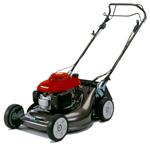
Manufacturer sources: Honda HRR216K1 PDA/SDA/S3DA owner manual; Honda U.S. HRR manual selector and S3DA serial band; Honda U.S. gasoline mower line status; Honda recalls and updates.
Key details at a glance
| Cutting width | 21 in |
|---|---|
| Self-propelled drive | Yes |
| Cutting-height range | 1–3.5 in |
| Mowing modes | mulching |
| Travel control | three_speed_gear |
| Fuel type | unleaded_gasoline |
| Engine model | Honda GCV160 |
| Engine displacement | 160 cc |
| Blade control | flywheel_brake |
| Starter type | recoil_only |
| Fuel tank capacity | 0.29 gal |
Use the exact model’s instructions for operating limits, supplied equipment and version differences.
Sources for this assessment

Match the mower to your yard and routine.
Use the finder for essential mowing modes, drive and kit requirements, then compare the exact models.