
Your needs, this model
Does it fit your priorities?
Do you need Honda Select Drive variable-speed dial and engagement control on this exact HRX configuration?
Honda specifies Honda Select Drive variable-speed dial and engagement control for HRX217K6VLA; this control is distinct from the other HRX travel system.
Explore this need in the finder →Do you need Flywheel brake stops engine and blade together?
Honda specifies Flywheel brake stops engine and blade together on HRX217K6VLA; compare blade-control type rather than relying on the HRX name alone.
Explore this need in the finder →Do you require Self-charging electric key start with recoil backup?
Honda specifies Self-charging electric key start with recoil backup for HRX217K6VLA; verify condition and the individual serial-range manual.
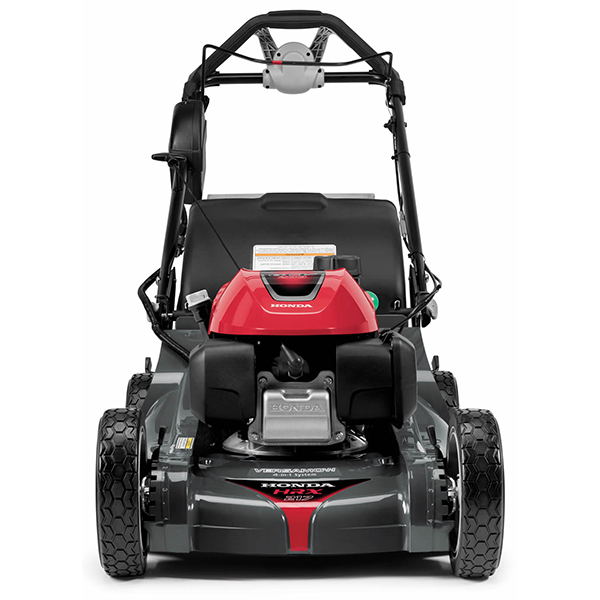
Explore this need in the finder →The Honda HRX217K6VLA is the Select Drive member of Honda’s discontinued HRX gas line that adds an electric starter while keeping a recoil pull-start as backup. It is still a 21-inch, self-propelled, four-in-one mower built around the GCV200 engine and NeXite deck. The distinction from the HRX217K6VKA is narrow but practical: the VLA gives a key-start option and weighs more, while the control, cutting width, deck material, bag size, and clipping system are otherwise closely aligned.
Starting is the reason to choose this code
Honda calls the VLA starter “Electric / Recoil” and describes it as a self-charging electric start. The owner’s manual says to use the electric starter key or recoil starter; if the battery is low after extended storage, it instructs the owner to start it manually for a mowing session so the onboard system can recharge. That means this is not a battery mower: the blade is powered by gasoline engine, and the small starter battery is part of the mower’s self-starting arrangement. It also means key-start convenience depends on a charged and working starter system. The backup pull-start remains useful, but it does not erase the difference for a shopper who wants to avoid pulling a rope every outing.
Its travel control is Honda’s variable-speed Select Drive, specified from 0 to 4 mph, rather than the hydrostatic Cruise Control used on the HYA and HZA. Honda’s manual describes a dial for setting maximum speed and a handle control that engages the rear wheels. The VLA retains a fixed throttle and a flywheel-brake blade control. Releasing that control stops the engine and blade; the mower does not provide the VYA, HYA, or HZA Roto-Stop behavior that separates blade stopping from engine stopping. If blade-off travel or short pauses with the engine running are essential, look to one of those models instead.
Cutting and handling are shared HRX strengths
Honda lists a 21-inch deck made from NeXite, twin MicroCut blades, seven height positions from 3/4 to 4 inches, and four mowing functions: mulch, bag, rear discharge, and leaf shred. The Clip Director lets the operator move the clipping balance between the bag and the lawn; Honda presents the leaf function as requiring no separate attachment. Its standard bag is rated at 2.5 bushels. That combination fits a homeowner who wants to alternate between collecting clippings, returning them to the lawn, and managing fallen leaves with one walk-behind mower. It does not turn the machine into a vacuum or remove the need to adjust technique for thick or wet material.
Honda’s product page lists 95 pounds dry and 97 pounds operating, six pounds above its VKA figures. This difference matters more when lifting, loading, turning in a tight shed, or moving a machine with the engine stopped than it does on a straight self-propelled pass. Measure the route from storage to lawn and any vehicle loading point. A nominal 21-inch cut does not say whether the mower body and handle can pass a gate or fit the storage space.
Earlier-product and upkeep considerations
Honda’s current navigation labels its gas-powered mower range discontinued, and the manufacturer has stated that production of its HRN, HRX, and HRC gas models ended in 2023. A product page still being available is not proof that a new VLA is on the shelf. This review can help compare a specific new-old-stock or used listing, but it does not establish present supply, dealer support, or the condition of any example. The original page lists five years of residential mower coverage, but the warranty’s purchase-date requirements and terms matter; a pre-owned buyer should not assume the original coverage transfers or remains unexpired.
Unlike the HRX-BV electric mower, the VLA has engine oil, gasoline, an air filter, spark plug, and fuel-storage considerations. Honda’s operator manual gives inspection and maintenance schedules and specifies fuel limits, while warning against steep slopes above 20 degrees and unsafe damp-slope operation. Follow the manual matched to the frame serial range, not a generic “HRX” guide. Honda also flags the HRX217 K6 line for serial-specific decompressor recall screening. The lookup page lists a broad MAMA frame-serial range but says many machines within that range are not affected, so a buyer needs the individual mower serial checked before treating recall status as settled.
Where it sits among the five
The VLA is the natural comparison for the VKA if key starting is worth more than lower published dry weight. The VYA adds Roto-Stop but retains recoil start and Select Drive. The HYA changes to hydrostatic Cruise Control and Roto-Stop while staying recoil-started; the HZA adds electric starting to that hydrostatic, blade-clutch arrangement and is heavier again. No one option is universally best: the right choice depends on whether starting, drive feel, blade control, and lifting weight are actual requirements rather than attractive labels.
For a VLA listing, verify “HRX217K6VLA” on the machine and confirm the frame serial, recall result, correct manual, and included grass bag. Ask what maintenance has been completed and whether the key-start system works; an electric-start badge alone does not confirm battery condition. If those exact checks and gasoline ownership suit you, the VLA’s combined recoil and key-start options are its distinguishing advantage.
Manufacturer sources: Honda HRX217VLA exact model page, Honda-linked operator manual, Honda recall lookup, and Honda’s gas-mower production announcement.
Key details at a glance
| Cutting width | 21 in |
|---|---|
| Self-propelled drive | Yes |
| Cutting-height positions | 7 |
| Cutting-height range | 0.75–4 in |
| Mowing modes | mulching / bagging / rear_discharge / leaf_shred |
| Blade system | Honda MicroCut twin blades |
| Grass bag capacity | 2.5 bu |
| Folds for compact storage | Yes |
| Deck material | nexite |
| Travel control | select_drive |
| Blade-stop / transport system | flywheel_brake |
| Powered transport with blade off | No |
| Residential mower warranty | 5 years |
| Commercial-design model | No |
| Fuel type | unleaded_gasoline |
| Engine model | Honda GCV200 |
| Engine displacement | 201 cc |
| Blade control | flywheel_brake |
| Starter type | electric_with_recoil |
| Honda listed dry weight | 95 lb |
| Honda listed operating weight | 97 lb |
| Fuel tank capacity | 0.24 gal |
| Drive-wheel layout | rear |
Use the exact model’s instructions for operating limits, supplied equipment and version differences.
Sources for this assessment
- Honda exact U.S. product page for HRX217K6VLA
- Honda HRX premium residential model lineup
- Honda operator manual linked from exact page for HRX217K6VLA, serial range MAMA-1742382 to 9999999
- Honda HRN/HRX gas mower decompressor recall model and serial lookup
- CPSC 2024 expanded Honda mower/engine recall notice
- Honda Power Equipment news release on discontinued gasoline mower production
- Honda exact-model product rendering for HRX217K6VLA

Match the mower to your yard and routine.
Use the finder for essential mowing modes, drive and kit requirements, then compare the exact models.